Tendencias de la Web Social: Oportunidades para Museos
Published by Pilar Gonzalo on 14 de octubre de 2008 at 13:48.
 0 Comments
He de decir que el curso fue una experiencia magnífica, tanto por los ponentes que por allí pasaron, como por el público que asistió. Los participantes (nunca mejor dicho) fueron tremendamente interesantes, participativos y pusieron de relieve que en nuestro país existen muchos profesionales de museos deseosos de que sus instituciones adopten herramientas web 2.0 de interacción y participación cultural. En resumen, muy esperanzador.
Como parte de mi presentación proyecté una serie de vídeos sobre museos que extraje de las redes sociales y que iré compartiendo con todos vosotros en entradas posteriores, dentro de la sección: "Lo que los museos dicen..."/"What museums say..."
Etiquetas: Museos 2.0, Museos en red, Sociable Museums, Web 2.0
lamusediffuseTV is a group of YouTube Playlists on relevant topics of museums. From specific areas of the world to common topics, lamusediffuseTV tries to present a curated vision of museums at YouTube. We encourage you watching them and sharing with us your reactions and any other video you considered interesting to add at lamusediffuse's channel. Maybe, if you are planning any visit during this summertime you should check first our lamusediffuseTV - Queues at Museums. Discouraging, but soooooooo real...
Etiquetas: lamusediffuseTV, Lo que la gente dice..., Lo que los museos dicen..., Sociable Museums, videos, Web 2.0, What Museums Say..., What People Say...
Can ART be experienced on a phone?
Published by Pilar Gonzalo on 5 de enero de 2008 at 11:48.
1 Comments
Cell phones, iPods, PDAs, etc. are the very new substitutes of the not so old museum audioguides. Users find some advantages using their own devices: they can use them at any moment and place, in other words: not only in the museum physical space and opening schedule. Besides, museums can save a huge expense in maintenance and updating their technology. Museums only have to provide contents suitable for being downloaded from their websites.
But can these technologies substitute on-site experience? Listen David Lynch's opinion about seeing films on a cell phone and try to remember your own daily experience with art museums.
I personally agree with Lynch's opinion and with Steven Spielberg's dislike about seeing films on the screen of a computer. However, thanks to these alternative ways of experiencing art, sometimes I could have that (incomplete) experience that otherwise never had been possible.

Etiquetas: Art, Audioguides, e-learning, mobile, Museums, Sociable Museums, User's Experience
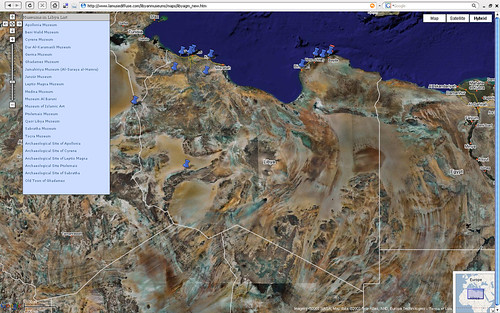
lamusediffuse proposes the use of Social Web tools for the inclusion of non-dominant cultural expressions in the scopes of culture diffusion on the Internet. Accordingly with this objective, the project “Museums in Libya 2.0” is focused on two starting facts, the first is the lack of information about Libyan museums available in the website of the International Council of African Museums (AFRICOM) and the second is the apparent lack of museum websites in this country. As a consequence of this, the objective of our project has been overcoming both realities through the following actions,
- Overcoming the gaps of Web 1.0 by using a methodology based on Web 2.0 tools as a flexible, interactive and participative alternative option of information exchange,
- Proving Social Web academic usefulness and its tools as a valid and effective research tool,
- Palliating the lack of contents on Libyan museums on AFRICOM website by compiling, contrasting and structuring the information available on the Internet about the subject,
- Elaborating a reference map where gathering and locating the museums of Libya,
- Raising awareness about the online institutional forgetfulness situation of Libyan Museums at the present time in comparison with others in the rest of the world,
- Creating a methodological model for small museums and museums of developing countries or under conflict situations, reasonable in economic and maintenance terms,
- Encouraging museum professionals to Web 2.0 tools use as an economic, simple and effective solution to overcome any lack of computer science personnel or tools and digital technology,
- Emphasizing the importance and role of the Jamahiriya Museum of Tripoli and improving its online visibility for both international and local audiences,
- Finally, creating a reference document on the Libyan museums that will be published under a Creative Commons license of attribution and for noncommercial use,
From now on you can enjoy the wonderful Libyan museums strolling through the interactive map, where you will find information on each museum provided by our collaborators and Social Web users. Do not forget also consulting our wiki and updating it with new data. Besides, you can collaborate sharing your photos of Libyan museums including them in our group in Flickr, e-artcasting.
At this moment we leave you with the presentation we have made to present the project on next July 11 at the Medialab of Madrid (Spain,) within the Inclusiva.net encounter: New Art Dynamics in Web 2 mode. Besides, you can consult the references of the project in lamusediffuse's del.icio.us account. We hope meeting some of you there!
Etiquetas: Africa, Archaeology, Art, Heritage, lamusediffuse, Libya, Map, Museums, Professional, Small Museums, Sociable Museums, Sociable Technologies, Social Software, Web 2.0, Wikis
lamusediffuse proponemos el uso de las herramientas de la web social para la inclusión de expresiones culturales no-dominantes en los ámbitos de difusión de la cultura en internet. En consonancia con este objetivo, el proyecto "Museos en Libia 2.0" se centra en dos hechos de partida: el primero ha sido la falta de información sobre los museos libios en la página web del Consejo Internacional de Museos Africanos (AFRICOM) y el segundo, la aparente carencia de páginas web de museos en dicho país. Como consecuencia de ello, el objetivo de nuestro proyecto ha sido superar ambas realidades por medio de las siguientes acciones:
- superar las lagunas de Web 1.0 por medio del uso de una metodología basada en el uso de las herramientas de la web social (Web 2.0) como una opción alternativa flexible, interactiva y participativa de intercambio de información,
- probar la utilidad académica de la web social y de sus herramientas como instrumentos válidos y efectivos de investigación,
- paliar la falta de contenidos sobre los museos libios de la página web de AFRICOM compilando, contrastando y estructurando la información disponible en internet sobre el tema,
- elaborar un mapa de referencia donde reunir y localizar los museos de Libia,
- sensibilizar sobre el olvido institucional en internet que en la actualidad están sufriendo los museos libios en comparación con los de otras areas del mundo,
- crear un modelo metodológico para museos pequeños y museos de países en desarrollo o en situaciones de conflicto, que sea asequible en términos económicos y de mantenimiento técnico,
- animar a los profesionales de museos al uso de las herramientas Web 2.0 como una solución económica, sencilla y eficaz para superar la falta de personal informático o de herramientas y tecnología digital,
- subrayar la importancia y el papel del museo Jamahiriya de Trípoli y mejorar su visibilidad en internet para una audiencia internacional,
- finalmente, crear un documento de referencia sobre los museos libios que sea publicado bajo una licencia Creative Commons de atribución y para uso no comercial
Puedes encontrar más detalles en la página web de lamusediffuse. Disfruta a partir de ahora de los maravillosos museos libios dándote un paseo por el mapa interactivo, donde encontrarás información sobre cada museo proporcionada por nuestros colaboradores y usuarios de la web social. No olvides consultar también el wiki y actualizarlo con nuevos datos. Asímismo, puedes colaborar compartiendo tus fotos de museos libios incluyéndolas en nuestro grupo en Flickr, e-artcasting.
De momento te dejamos con la presentación que hemos realizado para dar a conocer el proyecto el próximo 11 de julio en el Medialab de Madrid, dentro del encuentro Inclusiva.net: Nuevas dinámicas artísticas en modo web 2. Entretanto, puedes ir consultando las referencias del proyecto en nuestros enlaces en del.icio.us. ¡Te esperamos!
Etiquetas: África, Arqueología, Arte, Libia, Mapa, Museos, Patrimonio, Pequeños Museos, Profesional, Sociable Museums, Software social, Tecnologías sociales, Web 2.0, Wikis
Museums in Libya: Call for Collaboration
Published by Pilar Gonzalo on 15 de mayo de 2007 at 19:27.
1 Comments
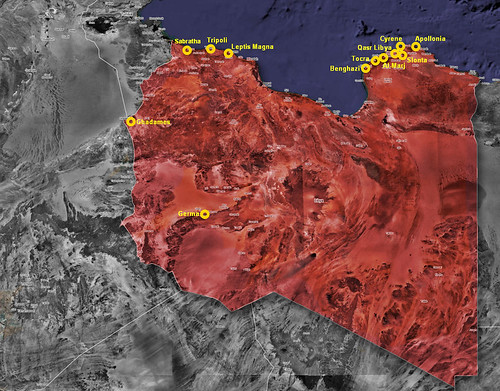 At e-artcasting we continue involved in a research to make Libyan museums visible online thanks to digital technologies and social software. Although Libya has fantastic museums, they are suffering from a pitiful lack of online visibility. This is something we want to palliate by using the possibilities of Web 2.0 tools and social collaboration.
Our project addresses two facts. The first one is the lack of information about museums in Libya available on the websites of related institutions, particularly on the AFRICOM’s one. The second fact is the apparent lack of museum websites in Libya. Thus, our final goal is achieving a reference document on Libyan Museums -focused on the specific example of the Jamahiriya Museum at Tripoli- and made it available online for researchers, professionals and people interested in Museums and Libyan Culture.
Till now and thanks to contributors like you we have been able to locate 12 museums on our map of Libya on the photo. However, we already have 24 museums listed in our Libyan Museums List belonging to our Museums in Libya wiki. Now, we want to populate and polish this information and create an interactive map with all your photos. To achieve it, we need your collaboration.
We would really appreciate if you check the Libyan Museums List to add any additional information you could know on any museum in the list or about anyone still not on it.
We also encourage you to share your photos on Libyan museums in our Flickr group, e-artcasting. We need you tagging photos on museums in Libya with, at least, this information,
- Continent where the museum is
- Country where the museum is
- City, Town, or specific location where the museum is
- Complete name of the museum
- the tag “Museum”
- the tag “Art” (in case of Art Museums)
If you have any video, article or any other kind of information; you can post them here at Ly-Hub, send it to our del.icio.us account with the tagg "for:e_artcasting" or contact us at contact@lamusediffuse.com
Please, help us to spread the word and do not hesitate to make us any question. We are looking forward your collaboration!
Etiquetas: Africa, Heritage, Libya, Museums, Professional, Sociable Museums, Sociable Technologies, Social Software, Web 2.0
Your Photos on Museums: Ile Ife National Museum, Nigeria
Published by Pilar Gonzalo on 12 de mayo de 2007 at 0:54.
0 Comments

You are Sociable Museums' most precious value. Thanks to your emails, comments and contributions Sociable Museums' mission is increasing its diverse outreach.
One of Sociable Museums most active activities is located at the Flickr group. Users are about to contribute 1,000 wonderful and rare photos on art museums from all over the world, so it is hight time for celebration. Today we start a new section named, "Your Photos on Museums" in which we will rescue on weekly basis a selection of your best contributions at our Flickr pool.
For our Grand Opening, this exquisite image of the Ile Ife National Museum (Nigeria) taken in April 1958 and posted by Rabinal, who also shared with us a fragment of The White traveller in Black Africa, by Colin Wills,
The Creation of the World (Yoruba version). The creation of the world took place at Ife. Orafame. The Supreme Being, the Creator, sent Orishala out from heaven to create the world. The way was long and hot, and Orishala rested in a grove of palms. He was thirsty, and he drank palm wine, and fell asleep, a serious dereliction in one with such a high task. Orafame was disappointed. He called another demigod named Oduwa, and sent him forth to carry out the mission. Oduwa did not pause by the way. He took earth, a hen, and a chameleon. The hen spread out the earth and scraped it into a mound, just as you will see her do today. The chameleon moved over the mound, testing it with his light weight, feeling gently with his little feet. His delicate,tremulous movements which you can see today, are a memory of that great task. From the mound grew the Earth. It was there that Orfame set down the first man and woman, and from there stemmed the Yoruba people. The mound still exists; I will show it to you presently, said my guide. Oduwa, naturally, is worshipped by millions of Yoruba. The chameleon is also sacred, and the hen, though eaten, is regarded with great respect and affection. But the strange thing is that Orishala also has his devotees. One might expect them to be the wine-bibbers of the community. On the contrary, they are the teetotallers. When Orishala awoke and found that somebody else had created the world while he slept, he bitterly lamented his failure, and swore never to touch palm wine again. He never did, and neither do any of his followers. His failing remains an example forever, a warning to men of their own frailties.Image: Rabinal: Museum at Ife, posted on September 2006.
Etiquetas: Africa, Art, Flickr, National Museum of Ile Ife, Nigeria, Photos, Sociable Museums, User Generated Content, Web 2.0, Yoruba, Your Photos on Museums
Providing 'Free' Digital Images to Scholars: Met, ARTstor and Accessibility to Online Art Collections
Published by Pilar Gonzalo on 16 de marzo de 2007 at 19:09.
0 Comments
Past March 12, 2007, The Metropolitan Museum of Art announced on its website, a “pioneering initiative to provide digital images to scholars at no charge.” This announcement has been immediately spread by the scholar blogosphere, as for example in the blog of The Chronicle of the Higher Education and The Attic.
This new service entitled "Images for Academic Publishing" (IAP) has been implemented in partnership with the nonprofit organization ARTstor. This service,
...will make images available via software on the ARTstor Web site. Initially, nearly 1,700 images representative of the broad range of the
According to The Chronicle of the Higher Education scholars in the
Although we consider this partnership among The Met and ARTstor a wonderful initiative and we really wish it would be imitated by other museums, we are especially concerned about the accessibility of this project.
This initiative is only applicable “for use in academic publications.” So, what would be considered an academic publication? Are publications outside universities and research centers -but signed by scholars- eligible? How is going to affect this to publishing companies? Are independent researchers considered scholars? About these issues you could read an interesting thread at Musematic.
Our second concern relates to the fact that, till the moment, only “the more than 730 institutions that currently license ARTstor” could have access to this service. In other words, this service is not for the overall academic community, it is just for certain institutions. Moreover, we could guess that although this service is strikingly announced as “no charge for scholars," becoming an ARTstor member required paying a fee, as eventually it was. But even willing to pay, not anyone could belong to the community because only institutions from,
About this, and as a disclaimer, ARTstor explains on its website,
ARTstor participation will be limited, at least initially, to interested institutions in the
Eventually, we wonder what the best formula to provide non charged uses to nonprofit organizations is in an online context for art collections. At the end, internet uses of online collections are being regulated by each country’s legal frame and within the strict boundaries of economical power. So, access to online art collections still remain restricted to certain people and areas of the world while the utopia of Web 2.0 as a universal plaza remains still as a dream. This is however, a difficult problem that requires the will of establishing international suitable laws and more partnerships like The Met has done.
However, some other improvements could be easily done for a more accurate policy on who are the potential professional users of online art collections. We wish The Met will extented the IAP service to Museum Professional Associations, from the listed and not listed countries. Do we need to be "scholars" to need access to online collections? We can guess that the members of AFRICOM, AAM, AAMC, COVICOM, ICOM, Museum-Ed, or SMA (just to provide some professional associations examples) would really appreciate and get good benefit of this gesture.
Etiquetas: .us, Accessibility, Art, Copyrights, Met, Museum-Ed, Online Collections, Sociable Museums
Proporcionando imágenes digitales “gratis” a académicos: MET, ARTstor y accesibilidad a colecciones de arte en internet
Published by Pilar Gonzalo on at 19:07.
0 Comments
El pasado 12 de marzo de 2007 el Metropolitan Museum of Art de Nueva York anunciaba en su página web una “inicitativa pionera para proporcionar imágenes digitales libres de coste a académicos”. Este anuncio ha sido inmediatamente difundido en la blogosfera académica, como por ejemplo en el blog del Chronicle of the Higher Education y en The Attic.
Este nuevo servicio denominado “Imágenes para Publicación Académica” (IAP en sus siglas en inglés) ha sido puesto en marcha en colaboración con la organización sin ánimo de lucro ARTstor. Este servicio:
… hará disponibles las imágenes por medio de un programa informático en la página web de ARTstor. Inicialmente, cerca de 1.700 imágenes representivas del extenso rango de la enciclopédica colección del Metropolitan Museum se harán disponibles a través de las más de 730 instituciones en la actualidad autorizadas por ARTstor hasta la fecha.
Según The Chronicle of the Higher Education, los académicos en Estados Unidos tienen que pagar caros permisos para hacer uso de las imágenes de los museos; un problema que, quizás, no afecta a investigadores en otros países. Sin embargo, las cuestiones aquí son varias.
Pese a que consideramos esta colaboración entre el Met y ARTstor una maravillosa inciativa -y deseamos sin lugar a dudas que sea imitada por otros museos- de este proyecto nos preocupa especialmente su accesibilidad.
Esta iniciativa es sólo aplicable para su uso “en publicaciones académicas¨. De modo que, ¿qué es lo que se considera una publicación académica? ¿Pueden optar a ello publicaciones ajenas a las universidades y centros de investigación, pero firmadas por académicos? Sobre estas cuestiones puedes leer una interesante conversación en Musematic.
Nuestra segunda preocupación hace referencia al hecho de que hasta el momento, sólo “las más de 730 instituciones en la actualidad autorizadas por ARTstor hasta la fecha” tendrán acceso a este servicio. En otras palabras, este servicio no es para el conjunto de la comunidad académica, sino para ciertas instituciones. Lo que es más, podíamos adivinar que aunque este servicio ha sido llamativamente anunciado como “sin cargo para académicos”, formar parte de ARTstor requería el pago de una cuota, com al final ha resultado ser. Pero incluso queriendo pagar no todo el mundo puede pertener a la comunidad pues sólo pueden hacerlo instituciones de los Estados Unidos de América, Canadá, Australia/Nueva Zelanda y el Reino Unido.
Sobre esto, y a modo de descargo, ARTstor explica en su página web:
La participación en ARTstor estará limitada, en principio y por el momento, a las insituciones interesadas de los Estados Unidos de América, Canadá y el Reino Unido. Las leyes de propiedad intelectual y copyright difieren de país a país; la mayoría del contenido de la Biblioteca Digital ARTstor estará disponible a participantes internacionales pero algunos materiales con copyright no lo estarán debido a asuntos de copyright. Con el tiempo, esperamos ampliar la disponibilidad internacional de la Biblioteca Digital ARTstor.
Finalmente nos preguntamos cuál es la mejor fórmula para proporcionar usos gratuitos a instituciones sin ánimo de lucro en el contexto de las colecciones de arte disponibles en internet. Al final, los usos de las colecciones en internet están siendo regulados por el marco legal de cada país y dentro de las estrictas delimitaciones del poder económico. De modo que el acceso a las colecciones en internet todavía permanece restringido a cierta gente y a cientas áreas del planeta, mientras la utopía de Web 2.0 como una plaza universal todavía sigue siendo un sueño. En cualquier caso, éste es un problema de difícil solución que requiere de la voluntad de establecer leyes internacionales apropiadas y más colaboraciones como la hecha por el Met.
No obstante, otras mejoras pueden ser fácilmente hechas en aras de una política más acertada sobre quiénes son los potenciales usuarios profesionales de las colecciones de arte en internet. Así, deseamos que el Met amplíe su servicio IAP a las asociaciones de profesionales de museos, tanto de los países que están en la lista, como de los que no. ¿Necesitamos ser “académicos” para necesitar acceso a las colecciones en internet? Podemos imaginar que los miembros de AFRICOM, AAM, AAMC, COVICOM, ICOM, Museum-Ed, o SMA (sólo por dar algunos ejemplos de asociaciones profesionales) apreciarían y aprovecharían enormemente este gesto.
Etiquetas: .us, Accesibilidad, Arte, Colecciones, Copyrights, COVICOM, ICOM, Met, Museum-Ed, Sociable Museums
Web 2.0 Initiatives Revitalizing Museums: 'Tableau Vivant' on Seurat’s Painting
Published by Pilar Gonzalo on 9 de enero de 2007 at 21:55.
0 Comments
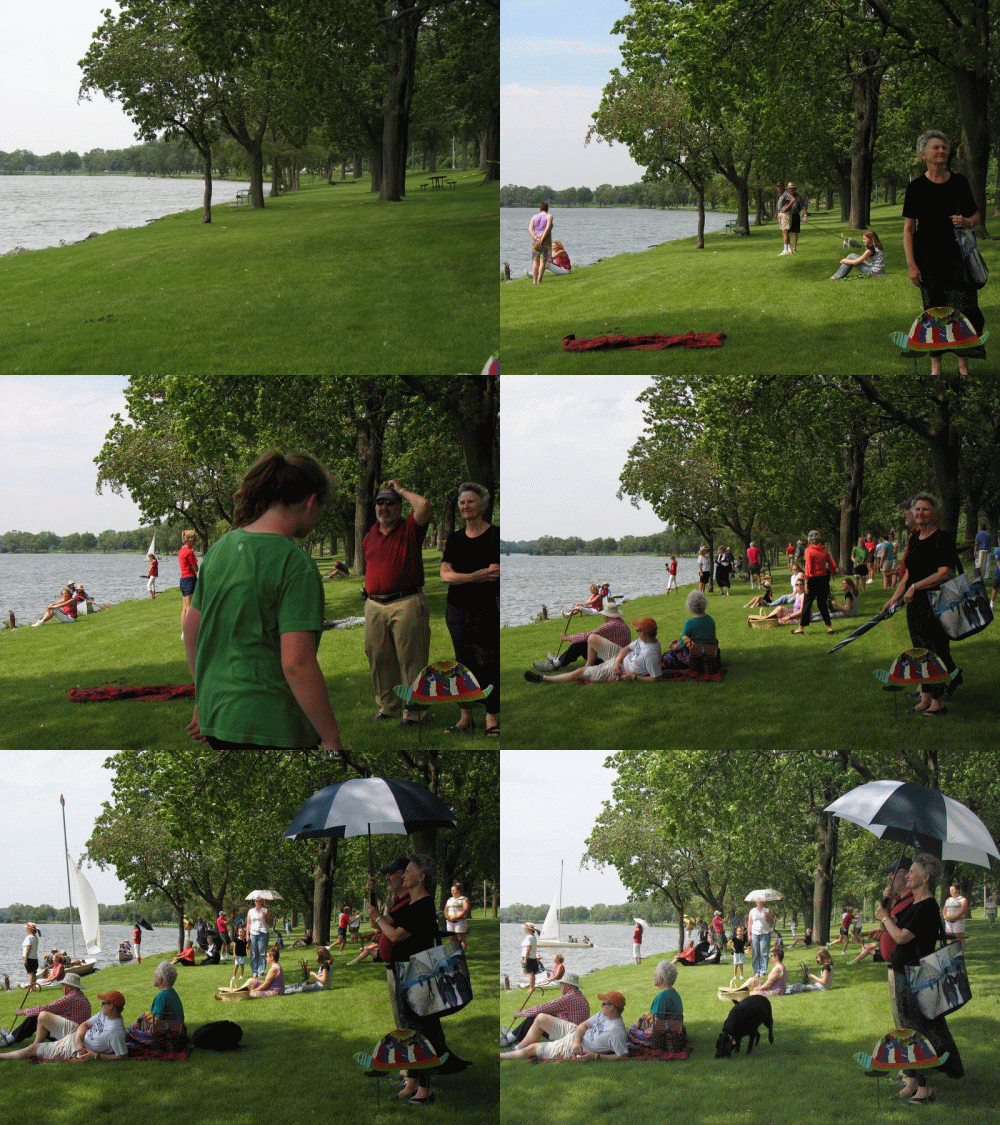
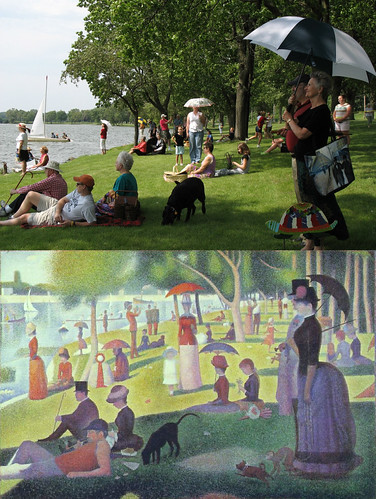 Here a marvelous example of the impact art can have among people and how popular initiatives driven through Web 2.0 tools can be deeply intriguing and beneficial for museums’ outreach.
The Friends of Riverfront at Beloit, Wisconsin (USA) -a broad based group of volunteers sharing a passion for enhancing and celebrating community living along Beloit’s riverfront- has given a lesson of imagination, creativity and sensitivity. This group has accomplished with real people a recreation of the famous painting by George Seurat, “Sunday Afternoon on the Island of La Grande Jatte-1884.”
This replica of “Sunday Afternoon…” was nevertheless made on Saturday (though also afternoon) on July 1st, 2006 at the banks of the Rock River in Beloit to promote an August group’s activity called “Saturday in the Park with Friends.” The result was a complete success: a day of fun, community life, collaboration and creativity; in addition to an engaging ‘tableau vivant’ on the Seurat’s exceptional painting at the collection of the Art Institute of Chicago.
The event not only demonstrated popular initiative’s potential in making appealing contents, but also some possible applications for Art Museums. Underlining the wide range of possibilities of Social Software, this project provides a wonderful example to the lots of art museums still reluctant to open the creation and interpretation of their contents to their audiences. What, if not, is a museum but humans' creations and interaction?
Accordingly to the collective and collaborative spirit of the project, some images of the event are available online thanks to Social Software. In this photographic set at Flickr you can also find comments, anecdotes and more information, such as an animation of the making off, which is also described at Oldonliner´s blog (one of the organizers of the event.) In addition to this, the experience has also been featured in an article significantly titled "Art is Alive Along the River," published at Beloit Daily News by Ann Montgomery.
In a former article, “Web2.0 Photographic Project by National Museums Liverpool” we told how Web2.0 not only can engage new audiences to art museums, but also can get their collections being revisited by contemporary visions. Now and thanks to the Friends of Riverfront we can enjoy another example of how incredibly engaging contemporary public can be interpreting art collections through web2.0 tools.
Finally, a wish: it would be wonderful if the Art Institute of Chicago included the Friends of Riverfront’s initiative as part of the complementary information about “Sunday Afternoon on the Island of La Grande Jatte - 1884.” Not in vain, this is one of the best feedbacks and homage a museum could ever have on its collection: people making alive their art works.
Image: Oldonliner: First Example on Seurat's Photo, 2006.
Etiquetas: .us, Art Institute of Chicago, Flickr, Photos, Seurat, Sociable Museums, Web 2.0
When Cameras Inside Museums Are Forbidden: Web2.0 and Copyrights
Published by Pilar Gonzalo on 18 de diciembre de 2006 at 8:14.
4 Comments
Among the main qualities of Web2.0 I like most are that it is: diverse, creative, generous, laid-back, useful, and contradictory. Today I will focus on the two last ones: usefulness and paradoxes. As in all Guggenheim Foundation Museums, Guggenheim-Bilbao Museum does not allow visitors taking pictures or recording videos inside the building. This policy maybe had any relation with art works' copyright or more probable indeed, with Frank Gehry's copyright and any possible commercial use of the Guggenheim Foundation images. However, it is my belief that this policy is pretty outdated, moreover, it is unfair for visitors and it definitively works against the institution itself. Since visitors are paying their entrance to the building, any potential copyright issue should be considered part of the ticket fare, as it could be the case regarding museum's maintenance expenses, personnel, etc. That used to be the reason why visitors get upset whenever they realize they are not allowed to use cameras inside the Guggenheim Museums: because they had already paid the ticket and they do not want to pay two times for the same thing. Maybe you were right now thinking that this is because of artists' copyright reasons and that artists should be paid back in case of any audiovisual dissemination of their work. Of course that is something I totally agree with, but ideally this should be previously negotiated between the museum and the artists themselves without being a trouble for visitors. It should be a real issue if the Guggenheim Foundation was not able to negotiate the rights of its temporary exhibitions, or even worse, if it did not hold the rights of its own collection. In addition to this, any possible missuse of the images taken would be the responsability of the person publishing them, not of the museum. So let us say that the Foundation has under control all these copyrights. In that case, anybody could think that what really happens is because of a commercial strategy to control all images of the museum to further sell them, renting the space and/or the right to take images inside. In other words, the Guggenheim Foundation seems to be choosing exclusivity as its management policy, something that is really opposite to Web 2.0 principles and new trends among general public and art museum's visitors/users. The video linked above is a fragment of the DVD Architectures, Vol. 4 (2005) produced by Facets Multimedia. I can guess that the company paid a good amount of money for being allowed to record inside both the building and behind the scenes. Although probably the original DVD holds any copyright, this documentary production is however available in Google Video, and it is free. Despite its image quality is really bad, this online copy permits us to share its contents in this vlog and to let some others to know and experiment the wonders of Guggenheim-Bilbao Museum. What is more, I am sure that after posting this video on Sociable Museums, some of you will feel curious and willing to visit it (and paying the ticket.) In the meanwhile, enjoy this interesting video available for downloading here. | |
Etiquetas: .es, Copyrights, Forbidden, Guggenheim, Museums, Sociable Museums, Web 2.0
Cuando las cámaras dentro de los museos están prohibidas: Web2.0 y derechos de reproducción
Published by Pilar Gonzalo on at 8:03.
0 Comments
Entre las principales cualidades que más me gustan de la Web 2.0 están que es: diversa, creativa, generosa, relajada, útil y contradictoria. Hoy me centraré en las dos últimas: utilidad y paradojas.
Como en todos los museos de la Fundación Guggenheim, el Museo Guggenheim-Bilbao no permite a sus visitantes sacar fotografías o grabar vídeos dentro del edificio. Esta política tal vez tenga alguna relación con los derechos de las obras de arte o, mucho más probablemente, con los derechos de reproducción del arquitecto Frank Gehry así como un posible uso comercial de las imágenes de la Fundación Guggenheim. No obstante, es mi creencia que esta política se encuentra bastante desfasada y lo que es más, es injusta para los visitantes y va definitivamente en contra de la propia insititución.
Desde el momento en que los visitantes están pagando su entrada al edificio, cualquier posible asunto relacionado con derechos de reproducción debería ser considerado parte del coste de la entrada, como podría ser el caso en lo referente a los gastos de mantenimiento del museo, personal, etc. Esa suele la razón por la cual los visitantes se sienten molestos cuando se dan cuenta de la prohibición de usar cámaras en los museos Guggenheim: porque ya han pagado la entrada y no quieren pagar dos veces por la misma cosa.
Tal vez ahora estés pensando que ello se debe a los derechos de reproducción de las obras de los artistas y que éstos deberían recibir dinero en caso de cualquier posible difusión audiovisual de sus trabajos. Por supuesto eso es algo con lo que estoy profundamente de acuedo, pero lo ideal sería que eso estuviera ya negociado de antemano entre el museo y los propios artistas sin suponer un problema para los visitantes. Sería un aunténtico problema si la Fundación Guggenheim no fuera capaz de negociar los derechos de sus exposiciones temporales o, lo que es peor, si no tuviera los de su propia colección. Además, el posible uso ilegal posterior de las imágenes sería siempre responsabilidad de quien lo comete, no del museo.
De modo que supongamos que la Fundación tiene bajo control todos estos derechos de reproducción. En tal caso se podría pensar que lo que realmente sucede es debido a una estrategia comercial para controlar todas las imágenes del museo y posteriormente, venderlas, alquilar el espacio y/o el derecho de obtener imágenes dentro. En otras palabras, la Fundación Guggenheim parece elegir la exclusividad como política de gestión, algo que realmente es contrario a los principios de Web 2.0 y las nuevas tendencias entre el público en general y los visitantes/usuarios de museos de arte.
El vídeo incluído arriba es un fragmento del DVD Architectures, Vol. 4 (2005) producido por Facets Multimedia. Podemos imaginar que la compañía pagó una buena cantidad de dinero para ser autorizada a grabar tanto dentro del edificio como entre bastidores. Aunque probablemente el DVD original tenga derechos de reproducción, esta producción documental se encuentra sin embargo disponible en Google Video, y es gratis.
Pese a que la calidad de su imagen es francamente mala, esta copia en internet nos permite compartir los contenidos de este documental en nuestro vlog y así dejar que otros conozcan y experimenten las maravillas del Museo Guggenheim-Bilbao. Es más, estamos seguros de que tras publicar este vídeo en Sociable Museums, algunos de vosotros sentiréis curiosidad y desearéis visitarlo (y pagar la entrada).
Entretanto, disfrutad de este interesante vídeo disponible aquí para su captura.
Etiquetas: .es, Copyrights, Guggenheim, Museos, Sociable Museums, Web 2.0
Web 2.0 Photographic Project by National Museums Liverpool
Published by Pilar Gonzalo on 7 de diciembre de 2006 at 5:39.
0 Comments
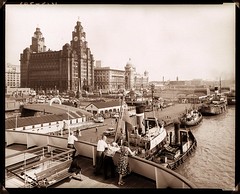

In our former blog (disappeared at the end of August because of the mysteries of technology) we were telling that the organization National Museums Liverpool (United Kingdom) had organized a Web2.0 photographic project to document Liverpool. The project was called “Stewart Bale 2.0” and it was based in the Stewart Bale Ltd. Photographic Collection owned by National Museums Liverpool.
The organization invited both amateur and professional photographs using Flickr, to recreate the photographs of its collection. The project is currently an online photography exhibition.
This initiative is a wonderful example of how Web2.0 (a new generation of internet services which make use of collaboration, shared participation and tagging to crate 'social software') not only can engage new audiences to art museums, but also can get their collections being revisited by contemporary visions.
As it can be seen, it is not necessary having a contemporary art collection to understand new audiences and their relation with technology. Fortunately, there is an increasing number of museums understanding it in this way.
Images: Stewart Bale: Pier Head, 1959 (original) (left); Pete Carr: Pier Head, 2006 (right)
Etiquetas: .uk, Art, Collections, Flickr, lamusediffuse, Museums, National Museums Liverpool, Photos, Sociable Museums, Social Software, Web 2.0
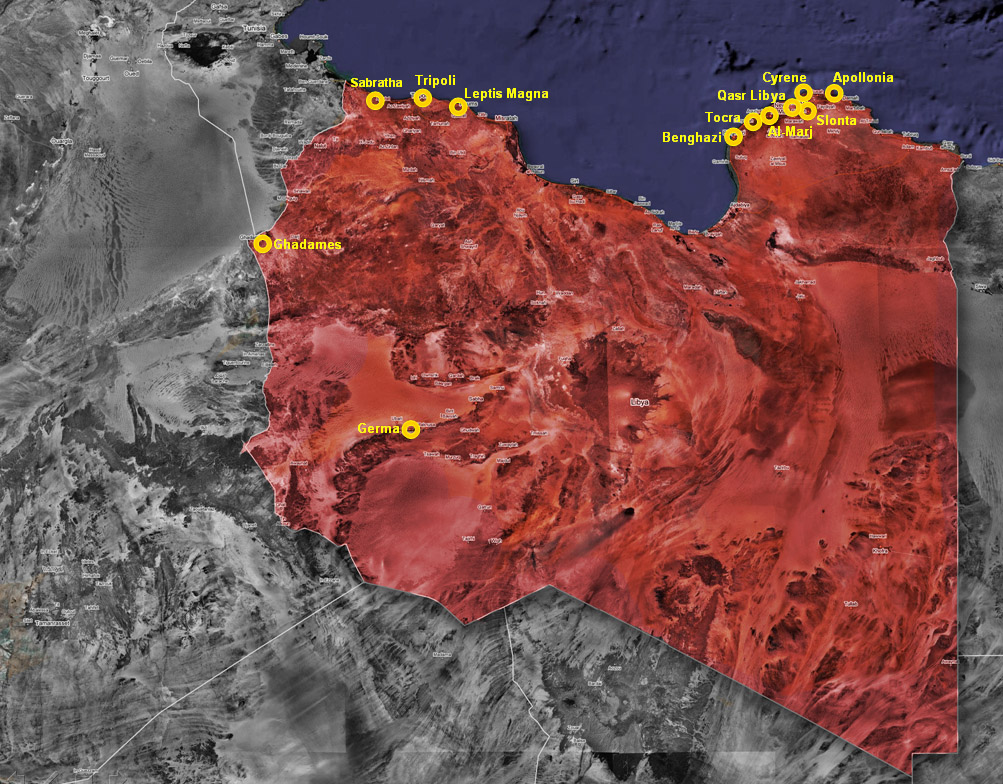
These last days I have been very busy trying to find information about museums in Libya to ellaborate a map of museums in that country.
Unfortunately, the International Council of African Museums (AFRICOM) is not including in its website information about Libyan Museums. However, they are wonderful institutions which specifically need of more visibility to be recognized as they should be in the international landscape. That is the reason why after an intense search in the Social Web, I have elaborated this map which gathers and places all museums we are aware of. Now, thanks to the Web 2.0 tools, it is my pleasure to share this map of Libyan Museums with all of you.
Do not forget to check e-artcasting Photoproject and add your comments and tags to the image.
Images: lamusediffuse: Map of Museums in Libya, 2006
Etiquetas: Africa, Flickr, Libya, Map, Museums, Photos, Sociable Museums, Social Software, Web 2.0
Estos últimos días he estado bastante ocupada tratando de localizar información sobre museos en Libia con la que poder elaborar un mapa de museos de ese país.
Desgraciadamente, el Consejo Internacional de Museos Africanos (AFRICOM) no incluye en su página web información sobre los museos libios. Sin embargo, se trata de magníficas instituciones, precisamente necesitadas de más visibilidad para ser reconocidos como deberían en el panorama internacional. Es por eso que tras una intensa búsqueda en la web social he confeccionado este mapa que reúne y sitúa todos los museos de los que he tenido constancia. Ahora, gracias a las herramientas Web 2.0, tengo el placer de compartir este mapa con todos vosotros.
No dejéis de consultar nuestro Proyecto Fotográfico en Flickr y añadir vuestros comentarios y etiquetas en la imagen.
Imagen: lamusediffuse: Mapa de museos en Libia 02, 2006
Etiquetas: África, Flickr, Fotos, Libia, Mapa, Museos, Sociable Museums, Software social, Web 2.0
e-learning Systems for Aged Art Museums
Published by Pilar Gonzalo on 16 de noviembre de 2006 at 19:13.
0 Comments

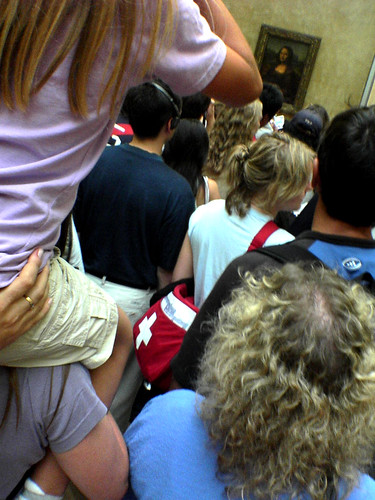
Who said internet and e-learning systems were necessary for museums of only Contemporary Art? See on the photo (if you are able) 'La Gioconda' at the Louvre Museum, Paris. If you want to meet her in person, surely you will thank some extra help.
The Louvre offers virtual tours on its website, but the one devoted to La Gioconda is even more frustrating than on site. Although the extremely famous painting appears without visitors, the software does not allow getting closer to the art work. Despite this fact, what is probably the most visited museum on the World only offers traditional information systems.
In addition to check the text and the images on the website (with very good quality,) the only supplementary information option to visitors provided by the museum is audio guides. After having to queue during long time and over on receipt of 5 euros and an ID deposit, visitors will be allowed to carry an uncomfortable portable cd player model during their visit. The other option is hiring a guide tour, which because of the amount of visitors, the noise and the real movement difficulty; includes a headset service to be able to hear guides’ explanations.
Maybe the logical alternative to this entire nuisance would be an additional podcast and/or vodcast service on the website of the museum, so people would arrive to the museum provided with their respective explanations to enjoy at the same time they appreciate art works or, who knows, they queue listening to some music customized by the very Gioconda.
Etiquetas: .fr, Art, Audioguides, e-learning, Gioconda, lamusediffuse, Louvre, Mona Lisa, Museums, Podcasts, Sociable Museums
Sistemas de aprendizaje electrónico para museos de arte entrados en años
Published by Pilar Gonzalo on at 19:11.
0 Comments
¿Quién dijo que internet y los sistemas de aprendizaje electrónicos eran necesarios en los museos sólo de Arte Contemporáneo? Observa en la fotografía (si eres capaz) a "La Gioconda" en el Museo del Louvre, París. Si quieres ir a conocerla en persona seguro que agradecerás ayuda extra.
El Louvre ofrece visitas virtuales en su página web, pero la dedicada a La Gioconda es, si cabe, más frustrante que al natural. Aunque en la imagen virtual la celebérrima pintura aparece sin público, el programa informático no permite acercarse a la obra. Pese a ello, el que es probablemente el museo de arte más visitado del mundo sólo ofrece los sistemas de información tradicionales.
Además de consultar el texto y las imágenes de la página web (de muy buena calidad), la única alternativa de información adicional para el visitante proporcionada por el museo son las audioguías. Tras esperar una larga cola y previo pago de 5 euros y depósito de un documento de indetificación, el visitante podrá cargar con un incómodo modelo de lector portátil de cd durante visita. La otra opción es contratar un servicio de guía que, eso sí, dada la afluencia de público, el ruido y la dificultad real de movimiento, incluye un servicio de auriculares para poder oir sus explicaciones.
Tal vez la alternativa lógica a todo este engorro sería un servicio adicional de podcasts y/o vodcasts en la página web del museo, así los visitantes llegarían ya provistos de sus correspondientes explicaciones que poder disfrutar al mismo tiempo que aprecian las obras o, quien sabe, esperan en una cola.
Imágenes (véanse en la versión en inglés de este mismo artículo): Corneille, Petite: Mona Lisa,2005. Fotografía. (izda.) iPod® Nano Skin ‘Mona Lisa’ (dcha.)
Etiquetas: .fr, Arte, Audioguías, Gioconda, Louvre, Mona Lisa, Museos 2.0, Podcasts, Sociable Museums
Podcasts and Eternal Topics
Published by Pilar Gonzalo on 30 de octubre de 2006 at 15:15.
0 Comments
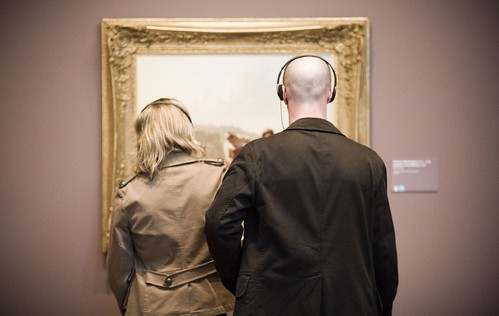

Couple at De Young Museum of San Francisco (USA) using the audioguides-podcast service the museum offers. A cutting-edge image that however, closely relates the deepest tradition of American Art: see the similarities with the very famous Grant Wood's painting American Gothic.
More information about De Young Museum podcasts at our Wikispace.
Images: Hawk, Thomas: Couple, 2006. Photography (left); Wood, Grant: American Gothic, 1930. Oil on beaverboard, 74.3 x 62.4 cm. Col. Art Institute of Chicago (right)
Etiquetas: .us, Art Institute of Chicago, Audioguides, De Young, Podcasts, Sociable Museums
Pareja en el Museo De Young de San Francisco (USA) utilizando el servicio de audioguías-podcast que ofrece el museo. Una imagen vanguardista que sin embargo, alude directamente a la tradición más profunda del arte estadounidense: obsérvese el parecido con la famosísima pintura de Grant Wood, American Gothic.
Más información sobre los podcasts del Museo De Young en nuestro Espacio Wiki.
Imágenes: Hawk, Thomas: Couple, 2006. Fotografía (izda.); Wood, Grant: American Gothic, 1930. Óleo sobre tabla, 74.3 x 62.4 cm. Col. Art Institute of Chicago (dcha.)
Etiquetas: .us, Art Institute of Chicago, Audioguías, De Young, Podcasts, Sociable Museums
Podcasts at the 60th Annual Meeting of the Mid-Atlantic Association of Museums
Published by Pilar Gonzalo on 28 de octubre de 2006 at 5:56.
0 Comments
On Monday 23, I attended the lecture given by the people of AntennAudio, titled “Techno Interpretation for the iPod® Generation.” We could listen (and even see) some examples of podcasts and enhanced-podcasts (which means `with images”) made for some USA Art Museums. As we all already suspected, the future comes in the shape of videocasting. However, and in the meanwhile online video technology is being enough developed to participate in the vodcasting evolution, art museums seem to be increasingly addressing podcasts as an additional tool for educating and engaging new audiences.
Etiquetas: .us, Museums 2.0, Podcasts, Sociable Museums, videos