Your Photos on Museums: Ile Ife National Museum, Nigeria
Published by Pilar Gonzalo on 12 de mayo de 2007 at 0:54.
 0 Comments

You are Sociable Museums' most precious value. Thanks to your emails, comments and contributions Sociable Museums' mission is increasing its diverse outreach.
One of Sociable Museums most active activities is located at the Flickr group. Users are about to contribute 1,000 wonderful and rare photos on art museums from all over the world, so it is hight time for celebration. Today we start a new section named, "Your Photos on Museums" in which we will rescue on weekly basis a selection of your best contributions at our Flickr pool.
For our Grand Opening, this exquisite image of the Ile Ife National Museum (Nigeria) taken in April 1958 and posted by Rabinal, who also shared with us a fragment of The White traveller in Black Africa, by Colin Wills,
The Creation of the World (Yoruba version). The creation of the world took place at Ife. Orafame. The Supreme Being, the Creator, sent Orishala out from heaven to create the world. The way was long and hot, and Orishala rested in a grove of palms. He was thirsty, and he drank palm wine, and fell asleep, a serious dereliction in one with such a high task. Orafame was disappointed. He called another demigod named Oduwa, and sent him forth to carry out the mission. Oduwa did not pause by the way. He took earth, a hen, and a chameleon. The hen spread out the earth and scraped it into a mound, just as you will see her do today. The chameleon moved over the mound, testing it with his light weight, feeling gently with his little feet. His delicate,tremulous movements which you can see today, are a memory of that great task. From the mound grew the Earth. It was there that Orfame set down the first man and woman, and from there stemmed the Yoruba people. The mound still exists; I will show it to you presently, said my guide. Oduwa, naturally, is worshipped by millions of Yoruba. The chameleon is also sacred, and the hen, though eaten, is regarded with great respect and affection. But the strange thing is that Orishala also has his devotees. One might expect them to be the wine-bibbers of the community. On the contrary, they are the teetotallers. When Orishala awoke and found that somebody else had created the world while he slept, he bitterly lamented his failure, and swore never to touch palm wine again. He never did, and neither do any of his followers. His failing remains an example forever, a warning to men of their own frailties.Image: Rabinal: Museum at Ife, posted on September 2006.
Etiquetas: Africa, Art, Flickr, National Museum of Ile Ife, Nigeria, Photos, Sociable Museums, User Generated Content, Web 2.0, Yoruba, Your Photos on Museums
Web 2.0 Initiatives Revitalizing Museums: 'Tableau Vivant' on Seurat’s Painting
Published by Pilar Gonzalo on 9 de enero de 2007 at 21:55.
0 Comments
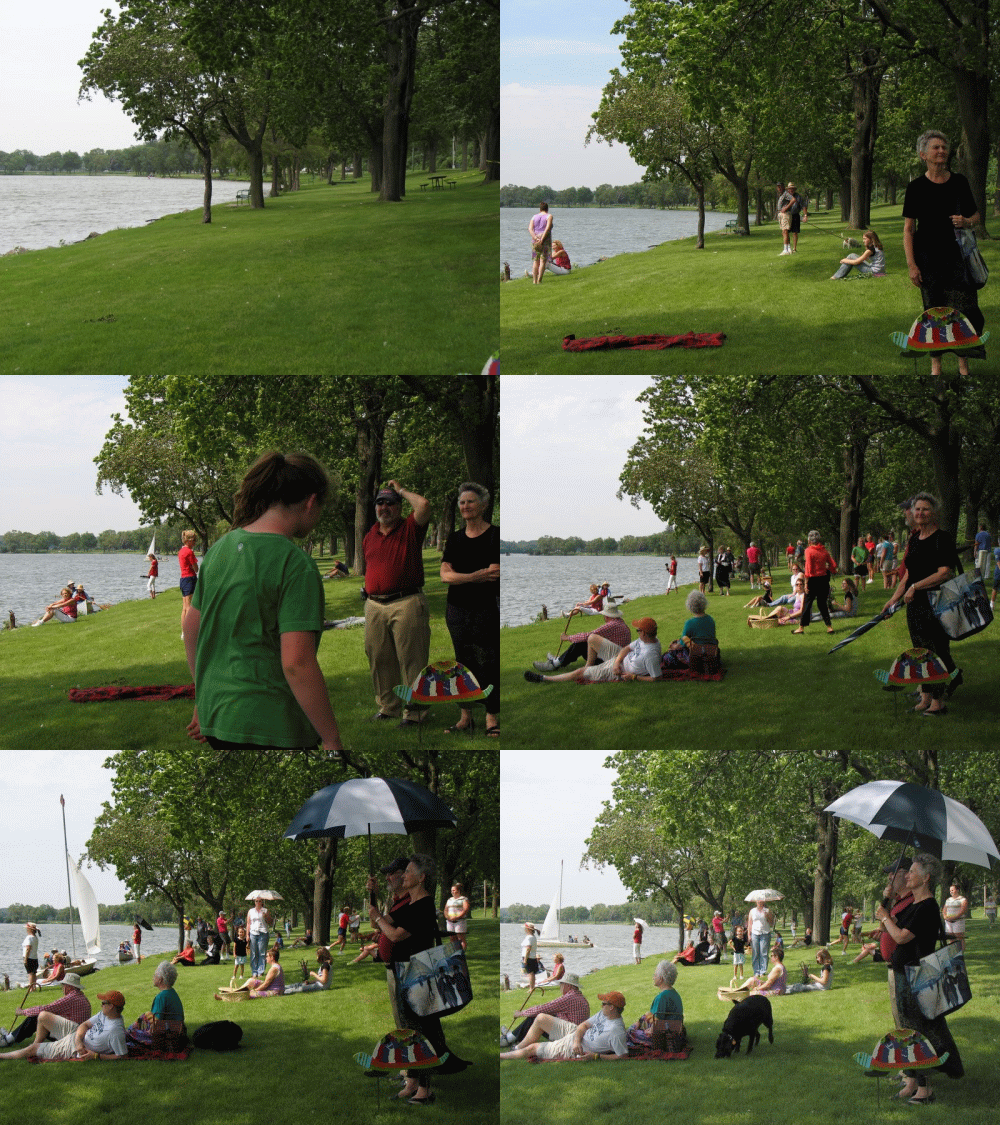
 Here a marvelous example of the impact art can have among people and how popular initiatives driven through Web 2.0 tools can be deeply intriguing and beneficial for museums’ outreach.
The Friends of Riverfront at Beloit, Wisconsin (USA) -a broad based group of volunteers sharing a passion for enhancing and celebrating community living along Beloit’s riverfront- has given a lesson of imagination, creativity and sensitivity. This group has accomplished with real people a recreation of the famous painting by George Seurat, “Sunday Afternoon on the Island of La Grande Jatte-1884.”
This replica of “Sunday Afternoon…” was nevertheless made on Saturday (though also afternoon) on July 1st, 2006 at the banks of the Rock River in Beloit to promote an August group’s activity called “Saturday in the Park with Friends.” The result was a complete success: a day of fun, community life, collaboration and creativity; in addition to an engaging ‘tableau vivant’ on the Seurat’s exceptional painting at the collection of the Art Institute of Chicago.
The event not only demonstrated popular initiative’s potential in making appealing contents, but also some possible applications for Art Museums. Underlining the wide range of possibilities of Social Software, this project provides a wonderful example to the lots of art museums still reluctant to open the creation and interpretation of their contents to their audiences. What, if not, is a museum but humans' creations and interaction?
Accordingly to the collective and collaborative spirit of the project, some images of the event are available online thanks to Social Software. In this photographic set at Flickr you can also find comments, anecdotes and more information, such as an animation of the making off, which is also described at Oldonliner´s blog (one of the organizers of the event.) In addition to this, the experience has also been featured in an article significantly titled "Art is Alive Along the River," published at Beloit Daily News by Ann Montgomery.
In a former article, “Web2.0 Photographic Project by National Museums Liverpool” we told how Web2.0 not only can engage new audiences to art museums, but also can get their collections being revisited by contemporary visions. Now and thanks to the Friends of Riverfront we can enjoy another example of how incredibly engaging contemporary public can be interpreting art collections through web2.0 tools.
Finally, a wish: it would be wonderful if the Art Institute of Chicago included the Friends of Riverfront’s initiative as part of the complementary information about “Sunday Afternoon on the Island of La Grande Jatte - 1884.” Not in vain, this is one of the best feedbacks and homage a museum could ever have on its collection: people making alive their art works.
Image: Oldonliner: First Example on Seurat's Photo, 2006.

Etiquetas: .us, Art Institute of Chicago, Flickr, Photos, Seurat, Sociable Museums, Web 2.0
Web 2.0 Photographic Project by National Museums Liverpool
Published by Pilar Gonzalo on 7 de diciembre de 2006 at 5:39.
0 Comments

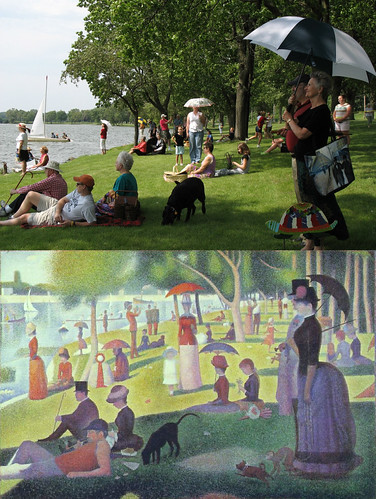
In our former blog (disappeared at the end of August because of the mysteries of technology) we were telling that the organization National Museums Liverpool (United Kingdom) had organized a Web2.0 photographic project to document Liverpool. The project was called “Stewart Bale 2.0” and it was based in the Stewart Bale Ltd. Photographic Collection owned by National Museums Liverpool.
The organization invited both amateur and professional photographs using Flickr, to recreate the photographs of its collection. The project is currently an online photography exhibition.
This initiative is a wonderful example of how Web2.0 (a new generation of internet services which make use of collaboration, shared participation and tagging to crate 'social software') not only can engage new audiences to art museums, but also can get their collections being revisited by contemporary visions.
As it can be seen, it is not necessary having a contemporary art collection to understand new audiences and their relation with technology. Fortunately, there is an increasing number of museums understanding it in this way.
Images: Stewart Bale: Pier Head, 1959 (original) (left); Pete Carr: Pier Head, 2006 (right)
Etiquetas: .uk, Art, Collections, Flickr, lamusediffuse, Museums, National Museums Liverpool, Photos, Sociable Museums, Social Software, Web 2.0
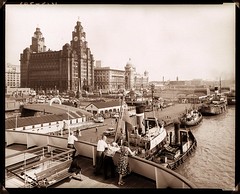
These last days I have been very busy trying to find information about museums in Libya to ellaborate a map of museums in that country.
Unfortunately, the International Council of African Museums (AFRICOM) is not including in its website information about Libyan Museums. However, they are wonderful institutions which specifically need of more visibility to be recognized as they should be in the international landscape. That is the reason why after an intense search in the Social Web, I have elaborated this map which gathers and places all museums we are aware of. Now, thanks to the Web 2.0 tools, it is my pleasure to share this map of Libyan Museums with all of you.
Do not forget to check e-artcasting Photoproject and add your comments and tags to the image.
Images: lamusediffuse: Map of Museums in Libya, 2006
Etiquetas: Africa, Flickr, Libya, Map, Museums, Photos, Sociable Museums, Social Software, Web 2.0
Photosharing of Art Museums in Africa
Published by Pilar Gonzalo on 7 de noviembre de 2005 at 20:57.
2 Comments

Sociable Museums is fully committed to take the best profit of the Web2.0 tools to share experiences about Art Museums from all over the World. As the information about Art Museums available online seems to be uneven, I have started a project to gather, locate and share photos of Art Museums in Africa.
So, I encourage you to add your photos to the e-artcasting's pool at Flickr conveniently tagged with,
- Name of the museum,
- City or specific location,
- Country,
- Continent: Africa
Thank you for your collaboration.
Image from the Flickr group Cairo Museum. Credits: Tybo: Armanian Head, 2004. Egypt Museum at El Cairo.
Image from the Flickr group Cairo Museum. Credits: Tybo: Armanian Head, 2004. Egypt Museum at El Cairo.
Etiquetas: Africa, Art, Museums 2.0, Photos, Sociable Museums, Web 2.0